Professional Yacht Deliveries* Ft Lauderdale, Newport, New York, Long Island, Bahamas

Professional Yacht Deliveries* Ft Lauderdale, Newport, New York, Long Island, Bahamas


Ft. Lauderdale, Fl Portsmouth, NH
Newport, RI Kennebunkport, ME
Norfolk, VA Jacksonville, FL
Charleston, SC Savannah, GA
Boston, MA Atlantic City, NJ
New York, NY Sag Harbor, NY
Montauk, NY Stuart, FL
Miami, FL Marathon, FL
Key West, FL Hudson River, NY
Lake Erie and Erie Canal

Tampa, Fl Brownsville, TX
Panama City, FL Gulfport, MI
Galveston, TX Naples, FL
Pensacola, FL New Orleans, LA
St, Petersburg, FL Baton Rouge, LA
Ft. Myers, FL Menphis, TN
Greenville, MI Morgan City, LA
Okeechobee Lake, Locks and Canal

Freeport, BS St. Johns, CB
Exuma's, BS St. Lucia, CB
Puerto Rico, USA Nassau, BS
BVI Bimini, BS
Barbados, CB Eleuthera, BS
Grand Bahama, BS Great Abaco, BS
Turks and Caicos, CB Antigua, CB

Individual care is given to every yacht I deliver. Before each trip, I research your vessel and review all charts for the area we will travel, ensuring your girl receives true “kid glove” care throughout the yacht delivery process. I provide personalized yacht delivery services to Ft. Lauderdale, Newport, the Gulf, Lake Erie, and the Erie Canal, Long Island, and destinations throughout the USA, the Bahamas, and the Caribbean. As a licensed 100-ton yacht delivery captain with more than 50,000 miles at sea, I offer safe and reliable long-distance yacht delivery and will deliver your vessel as if she were my own.

Do you own a boat that needs to be delivered from another state, country, Bahamas or Caribbean Island? Are you looking for an experienced delivery captain to bring your vessel to its new home? Whether you have a yacht heading to Newport for the summer, Fort Lauderdale for the winter, or the Bahamas for vacation, I provide yacht delivery services to ensure your vessel arrives on time and in prime condition. I also offer boat deliveries throughout the Bahamas and the Caribbean.
We can arrange a time to talk about the safe delivery of your vessel to the destination of your choice. When available, and not already committed to another delivery, I am ready to move your girl to your preferred port. As a 100-ton captain with more than 50,000 miles at sea, I can provide a crew and an experienced first mate for the journey when needed.
If you need an estimate, simply fill out the form below with your email, and I will send the information you need. With our competitive pricing and reliable long-distance yacht delivery, you will feel confident recommending our team to your friends.
There are a set of Coast Guard rules all must abide by:
uscgboating.org
https://www.boatus.org/study-guide/equipment/required
Go slow like a pro. Everyone at the dock is hoping to see some bad driving, docking, or trailering. Only come in as slow as you are willing to pay. The crowd will appreciate that you did it correctly. Remember, only come in as slow as you are willing to pay for the damage.
Yacht deliveries, boat deliveries, vessel deliveries, ship deliveries, cruiser deliveries, on-water deliveries, hurricane preparedness, and securing your girl.
With over 50 years of experience in motor vessels, my journey began as a teenager with a 13-foot Boston Whaler. After five decades on the water, I still have a huge grin on my face when thinking of the sea, with seriousness through and through.
Key Features
EXPERT SEAMANSHIP: My crew and I have a deep understanding of maritime navigation and seamanship. With years of experience navigating diverse waters and challenging conditions, we have the knowledge and expertise to safely maneuver your vessel to its destination, no matter what arises.
SAFETY FIRST: With me and my crew, safety is paramount. We follow strict safety protocols and industry best practices, prioritizing the well-being of your vessel and crew. From thorough safety inspections to clear emergency procedures, we work to ensure a secure and worry-free journey.
DEDICATION: When you choose us for your delivery, you can expect professionalism and integrity from start to finish. Every delivery is approached with dedication, attention to detail, and a commitment to exceptional service. From planning to post-delivery communication, we work closely with you to make the experience seamless.
CUSTOMIZED SOLUTIONS: Every boat delivery is unique, which is why I offer customized solutions tailored to your vessel and destination. Whether you need a solo captain for a smaller boat or a full crew for a larger yacht, I can provide the right team for a safe and efficient delivery. Over the years, I have delivered and owned numerous vessels—sixteen of them personally, sometimes shared with my wife. My deliveries have spanned New England, the Chesapeake, New York, the Carolinas, and South Florida, across powerboats and motor vessels. My routes have taken me through the Florida Keys, the West Coast of Florida, the Bahamas, the Caribbean, and north to Newport, Martha’s Vineyard, Block Island, and Nantucket. On my own 44' Post Yacht, I have ventured 100 miles offshore from New England to fish for tuna, swordfish, and wahoo. I have handled breakdowns on unmaintained yachts, made repairs underway, and ensured safe arrivals. I offer competitive pricing for yacht delivery services throughout the US, Bahamas, and Caribbean. As a seasoned boater with a 100-ton captain’s license, I have yacht crews ready for any need at
If you’re seeking a seasoned professional to helm your vessel on a safe and efficient journey, you’ve come to the right place. My experienced and licensed crew and I are ready to navigate your yacht to its destination with precision and care. Reasonable delivery rates.
I am your premier expert captain for yacht delivery. If you’re seeking a seasoned professional at the helm of your vessel on a safe and efficient journey across the seas, you’ve come to the right place. Myself and team of experienced boat delivery licensed crew stand ready to navigate your yacht to its destination with precision and care.
Learn proper boat handling from my many years of experience with yacht and vessel operation. I will teach you the “Rules of the Road” and guide you through essential skills such as docking, entering your lift, anchoring, navigating difficult harbor passages, and working through marinas. This training is a must for new boat owners, especially if you recently purchased a boat and need more confidence on the water. I provide the hands-on experience necessary for operational skills, navigation instruction, anchoring, stopping, and proper docking. These lessons are available in Lee–Ft. Myers, Collier–Naples, and Charlotte Counties.
I am committed to helping my clients navigate the beautiful Southwest Florida waterways that I have cherished for many years. With over 50 years on the water and more than 50,000 miles at sea, I enjoy sharing the knowledge I’ve gained. As someone who has also been a Realtor for over 37 years, I have a strong referral network to assist when needed. Count on me to help you navigate your paradise.


The horizon still beckons, and my course remains true. If there’s a breeze at my stern and a gleam in my eye, I’ll be scanning the charts and plotting my next adventure. In the end, a life well-lived is about chasing passions and making a difference. “Call of the Sea” by Captain Ron Smith shares the spirit of those journeys.
Please reach us at ronsmith33914@gmail.com if you cannot find an answer to your question.
North Atlantic USA from Maine to the Keys, Newport, Ft. Lauderdale, Long Island, the Erie Canal, the Gulf of Mexico, the Bahamas, and the Caribbean. I offer yacht delivery services throughout these areas, but not to Cuba at this time.
No. Just make sure the captain is covered under the owner’s policy.
Usually, one is needed for any trip on a boat over 40 feet, especially if locks are involved. Size, style, and propulsion also influence this. The owner or a family member can act as crew if they are willing to work as crew. This is not a vacation. Prior boating experience or training is important.
A working VHF radio, GPS chart plotter, depth sounder, running lights, and all required USCG safety equipment for a vessel of this size.
Besides the captain’s fee, which is typically $400–$600 per day depending on vessel size, delivery distance, and timeframe. Some other costs may apply. These can include a mate, marina fees, fuel, tipping, a per diem for food and provisions, flights or rental cars to or from the delivery, and immigration, customs, or landing fees for international destinations. All details are covered in the personal delivery agreement. **FREE QUOTE AVAILABLE**
Yes. Documentation must stay on the vessel for the entire trip, along with a note or letter appointing the captain as the owner’s agent.


West Palm Beach, Florida to Hilton Head, South Carolina
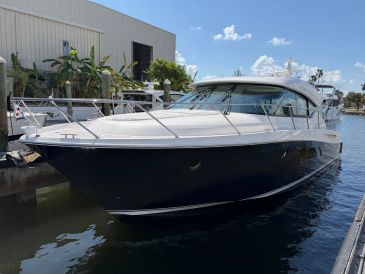
Your Yacht Delivery Here

Detroit Mi to Narragansett, RI
My yacht for over 13 years.

Sarasota, Florida to New Port Richey, Florida

West Palm Beach, Florida to Stonington, Connecticut

Stuart, Florida to Narragansett, Rhode Island

Norfolk, Virginia to Newport, Rhode Island

Beaufort, North Carolina to Marathon, Florida Keys

Loaded Yacht on Semi-Submersible Ship in Ft Lauderdale bound for Australia

(Similar boat) Panama City to Atlantic City, 1800 miles

Unknown brand, ( Similar Boat) Ft Myers to Pensacola

(Similar yacht) to Exuma and back to Miami for owner

Kennebunkport, Maine to Newport, Rhode Island

Islamorada, Florida Keys to Freeport

Delivered to Boston, MA

St Petersburg, Fl to Norfolk, Va

Port St Lucie to Ft Myers.
Across Okeechobee Canals & Locks

Panama City to Merritt Island, Fl

NYC to St Pete, Fl area. 1834 miles
Boat Pickup & Delivery points (city & state)
Length and type of vessel
Age, draft and estimate height to top of vessel
Engines - Brand and HP
Fuel Capacity
Is all USGC safety equipment on board?
Please include any other questions, thoughts, or concerns you feel are important.
MUST have email filled in so I can return your proposal.

Hiring a licensed, experienced captain

Our team is made up of myself and a few well qualified deckhands

The necessary safety equipment.
Boat delivery might seem straightforward at first—after all, it’s just moving a vessel from one place to another—but in reality, it’s a highly specialized process that involves far more than simply steering from point A to point B. The ease of a successful delivery comes from careful planning, technical knowledge, and real-world experience on the water. Every route has its own variables: changing weather patterns, navigation hazards, fuel logistics, mechanical reliability, and port regulations. An experienced captain knows how to anticipate these factors rather than react to them, which is what makes the entire process feel smooth and “easy” from the owner’s perspective.
One of the biggest advantages of hiring an experienced, licensed captain is risk management. Conditions on the water can shift quickly, especially offshore or along busy coastal routes. A seasoned captain understands how to read weather systems, interpret radar and charts, and make judgment calls that prioritize safety without unnecessarily delaying the trip. They’ve handled rough seas, tight marinas, equipment failures, and unexpected detours before, so they’re far less likely to be caught off guard. That level of preparedness significantly reduces the chances of damage to the boat or costly delays.
There’s also a technical side to boat delivery that often gets overlooked. Modern vessels are complex systems with engines, electronics, navigation equipment, and onboard utilities that all need to function properly over long distances. An experienced captain doesn’t just operate the boat—they monitor engine performance, troubleshoot minor issues before they become major problems, and ensure the vessel is running efficiently throughout the journey. If something does go wrong, they’re usually capable of addressing it at sea or making the right call about when to divert for repairs.
Legal and insurance considerations are another important piece of the puzzle. A licensed captain brings credibility and often meets the requirements set by insurance companies for coverage during a delivery. Without the proper credentials, you could risk voiding your insurance policy or running into compliance issues, especially when crossing state or international waters. An experienced professional understands these regulations and ensures everything is handled properly, so the owner doesn’t have to worry about unexpected liabilities.
Beyond safety and logistics, there’s also peace of mind. Handing over your boat—often a significant investment—to someone else requires trust. A reputable, licensed captain provides clear communication, maintains logs, and treats the vessel with the same care as an owner would. They understand that delivery isn’t just about getting the boat there, but getting it there in the same or better condition, ready for use.
In the end, the “ease” of boat delivery isn’t about the absence of challenges; it’s about having someone who knows how to handle them seamlessly. An experienced, licensed captain turns what could be a stressful, uncertain process into a controlled, efficient operation, allowing you to focus on enjoying your boat rather than worrying about how it gets where it needs to go.
Capt Ron Smith
100 Ton Master Captain
Cape Coral, Florida
239-770-5807

Understanding Latitude, Longitude, and Following Red and Green Markers: A Beginner’s Guide to Navigation from a Marine Captain
When you first begin navigating on the water, the ocean can feel wide and directionless. Unlike roads on land, there are no painted lanes or street signs. Instead, mariners rely on a system of coordinates and navigation markers to safely find their way. As a marine captain, I always emphasize two foundational concepts for beginners: understanding latitude and longitude, and learning how to correctly follow red and green channel markers.
Latitude and Longitude: Your Position on the Water
Latitude and longitude are the global coordinate system used to pinpoint any location on Earth.
Latitudemeasures how far north or south you are from the Equator. It ranges from 0° at the Equator to 90° at the North or South Pole. Lines of latitude run horizontally around the globe.
Longitude, on the other hand, measures how far east or west you are from the Prime Meridian, which runs through Greenwich, England. Longitude lines run vertically from pole to pole and range from 0° to 180° east or west.
When combined, these coordinates give you a precise position. For example, a GPS unit might show a position such as 26.5631° N, 81.9340° W. That coordinate represents a specific point on the chart and on the water.
Modern boats typically have GPS systems that automatically display latitude and longitude. However, understanding what these numbers mean is important. In an emergency, when communicating with the Coast Guard or another vessel, providing your coordinates allows rescuers to locate you quickly and accurately.
For beginners, I recommend practicing by locating your boat’s coordinates on a nautical chart. Doing this helps you understand how your digital navigation tools relate to traditional chart navigation.
Understanding Red and Green Channel Markers
While latitude and longitude tell you where you are, channel markers guide you safely through waterways. These markers indicate the safest and deepest path through channels, inlets, and harbors.
In the United States, boaters follow a simple rule often remembered as “Red, Right, Returning.”
This means that when you are returning from open water or heading upstream toward a harbor or marina, you should keep the red markers on your right (starboard side) and the green markers on your left (port side).
Red markers are usually even numbered and may appear as red buoys or posts. Green markers are typically odd numbered and appear as green buoys or posts. The numbers increase as you move inland or toward the harbor.
When heading out toward open water, the positions reverse. The red markers will then be on your left side, and the green markers will be on your right.
Why These Systems Matter
Together, coordinates and channel markers form the backbone of safe navigation. Latitude and longitude tell you your exact position, while red and green markers guide you through safe passages where underwater hazards such as sandbars, shoals, or rocks may exist.
For new boaters, these basics build confidence on the water. Learning to read your GPS coordinates and correctly follow channel markers will help you travel safely, avoid running aground, and communicate clearly with other mariners.
The ocean may not have roads, but with the right knowledge, it has a very reliable navigation system.
Capt Ron Smith
100 Ton Master Captain
Cape Coral, Florida
239-770-5807

Delivering a yacht is one of those experiences where preparation quietly determines everything. Finding the right marina isn’t just about a place to tie up—it becomes your temporary base, your safety net, and sometimes your only chance to reset before the next leg of the journey. A good marina reveals itself less through glossy photos and more through practical details: reliable fuel docks, clear approach channels, responsive staff on the radio, and enough depth for your draft even at low tide. When you’re arriving after a long passage, what matters most is how easy it is to get in, get secured, and get support if something isn’t right.
As you move along your route, you start to think of marinas as strategic checkpoints rather than destinations. Weather windows, fuel range, and crew fatigue all influence where you stop. A well-chosen marina sits just far enough to make progress but not so far that you’re pushing the boat or crew into risky conditions. Sometimes the “right” marina is simply the one you can enter safely before a front rolls through. Other times, it’s the one with a technician who can fix a minor issue before it becomes a major delay.
Navigation during a delivery demands a different mindset than casual cruising. You’re constantly balancing efficiency with caution. Electronic charts—whether on Navionics or Garmin Navionics Vision—give you a broad picture, but they’re only the starting point. You cross-check with updated notices, tide data, and sometimes even local knowledge from marina operators. Approaches to unfamiliar harbors are where discipline matters most: slowing down, verifying markers visually, and never assuming conditions match the chart exactly.
There’s also a rhythm to good navigation on a delivery. You plan ahead during calm moments—plotting alternate stops, identifying bailout points, and reviewing inlet conditions—so that when things get busy or conditions change, you’re not improvising under pressure. Night entries into marinas are usually avoided unless necessary, not because they’re impossible, but because the margin for error shrinks dramatically when visual references disappear.
In the end, choosing the right marina and navigating well are really the same skill expressed in different ways: awareness. You’re reading the environment, anticipating what could go wrong, and quietly stacking the odds in your favor. A smooth delivery rarely feels dramatic—it feels controlled, deliberate, and just a little bit easier than it could have been.
Capt Ron Smith
100 Ton Master Captain
Cape Coral, Florida
239-770-5807

New Book of Sea Adventures named
"CALL OF THE SEA"
by
Captain Ron Smith
This best seller on Amazon NOW!
Captain Ron Smith
Captain Ron Smith would love your feedback. Please leave us a Google review.